Ultimate Guide to Climbing Stromboli's Crater
Everything you need to know before attempting the summit: regulations, difficulty levels, essential gear, and what awaits you at the top.
924m
Summit Height
4-5h
Round Trip
750m
Elevation Gain
€30-50
Guided Tour
Climbing to the crater of Stromboli is one of the most unique hiking experiences in the world. Unlike most volcanoes, Stromboli is continuously active—it erupts every 15-20 minutes on average, and has been doing so for at least 2,000 years. Reaching the summit means witnessing these eruptions up close, a privilege few places on Earth can offer.
A Volcano Like No Other
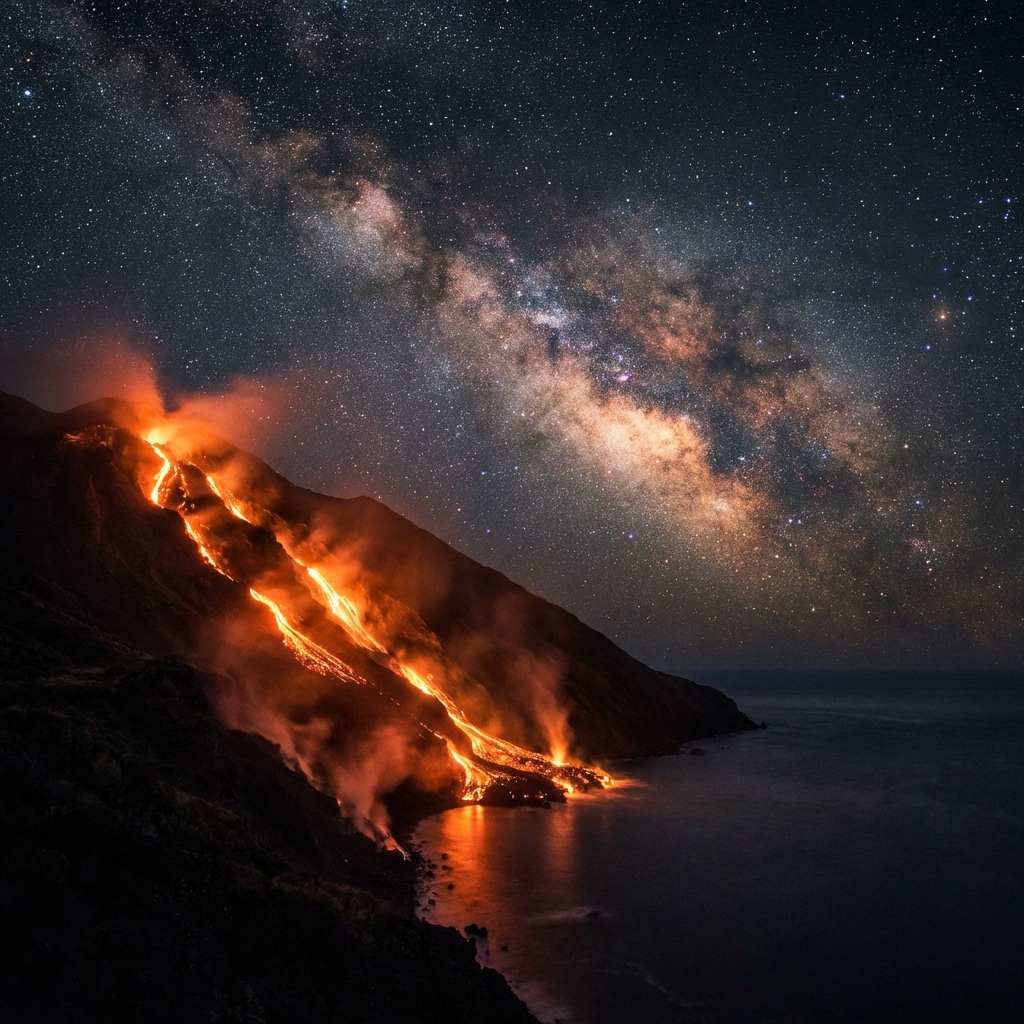
Known as the "Lighthouse of the Mediterranean," Stromboli has been visible to sailors for millennia due to its persistent glow. Geologically, it is one of the most active volcanoes on Earth, characterized by "Strombolian" activity—explosive bursts of laval and gas that occur rhythmically. Standing at the crater rim, you are not just seeing a mountain; you are witnessing the raw, primal force that created our planet. This is not a dormant peak; it is a living, breathing entity.
1. Current Access Regulations (2026 Update)
Safety is paramount on Stromboli. The activity level fluctuates, and civil protection authorities (Protezione Civile) adjust access zones accordingly. Currently, the following rules apply to ensure hiker safety:
- •Restricted Access ZonesIndependent hiking is permitted only up to 290m (near the Sciara del Fuoco viewpoint) or 400m depending on the current alert level. Any ascent beyond this limit MUST be accompanied by a licensed vulcanological guide.
- •Strict Group LimitsTo allow for rapid evacuation if necessary, guides are limited to small groups (typically 20 people). This also ensures a more intimate and quiet experience at the summit.
- •Mandatory Safety GearHelmets are non-negotiable and must be worn at all times in the upper zones due to potential falling debris from larger explosions. Masks are also carried in case of wind shifts bringing ash/gas.
⚠️ Current Alert Status: YELLOW/ORANGE
The volcano is unpredictable. Even with a booked tour, the summit climb can be cancelled at the last minute if monitoring stations detect irregular tremors or pressure changes. Always have a "Plan B" for your evening.
2. Difficulty: Is it Hard?
This is the most common question we receive. The answer is: yes, it is a physical challenge.While you don't need technical mountaineering sills (no ropes or crampons), you need stamina.
The Ascent
It involves ~900 meters of vertical gain over a relatively short distance. The path is steep, comprised of rock and volcanic soil. You will be hiking at a steady pace with few breaks to ensure the group reaches the summit by sunset. Humidity can be high in summer, making the effort feel more intense.
The Descent
Often underestimated, the way down goes through the "sand channels"—deep, loose volcanic ash. It's like walking down a giant sand dune. It's dusty and tiring on the knees. Good boots are crucial here to keep the sand out and protect your ankles.
3. Essential Gear: Don't Compromise
Your gear can make or break this experience. The guides have the right to refuse anyone who shows up with inadequate equipment (e.g., sneakers, sandals, no water).
Must Bring
- ✓High-cut Hiking Boots: Absolutely mandatory. Sneakers are dangerous on the descent.
- ✓Headlamp: The descent is in pitch black darkness.
- ✓Water (1.5L - 2L): There are no water sources on the mountain.
- ✓Windbreaker / Fleece: Summit temps are 10-15°C lower than sea level, plus strong winds.
- ✓Long Pants: To protect legs from abrasive volcanic rock and sand.
Provided by Tour
- infoProtective Helmet: Mandatory usage in upper zones.
- infoProtective Mask: For dust/gas (usually provided if conditions require).
- infoWalking Poles: Often available for rent/loan, highly recommended for the knees.
4. Step-by-Step Itinerary
Most tours follow a similar schedule to time the summit arrival with sunset. Here is what a typical afternoon looks like:
Meeting & Gear Check
Meet at the guide's office (usually near the church of San Vincenzo). The guides will inspect everyone's boots and backpack. If you need to rent gear, this is the time.
Into the Vegetation
The first hour is humid and steep, winding through dense Mediterranean scrub, reeds, and fig trees. The path is paved with ancient stones initially, then turns to dirt.
Losalah (The Old Cemetery)
Around 500m elevation, the vegetation disappears. You enter a stark, black landscape of solidified lava flows and ash. The view opens up fully to the sea and the islet of Strombolicchio.
Face to Face with Fire
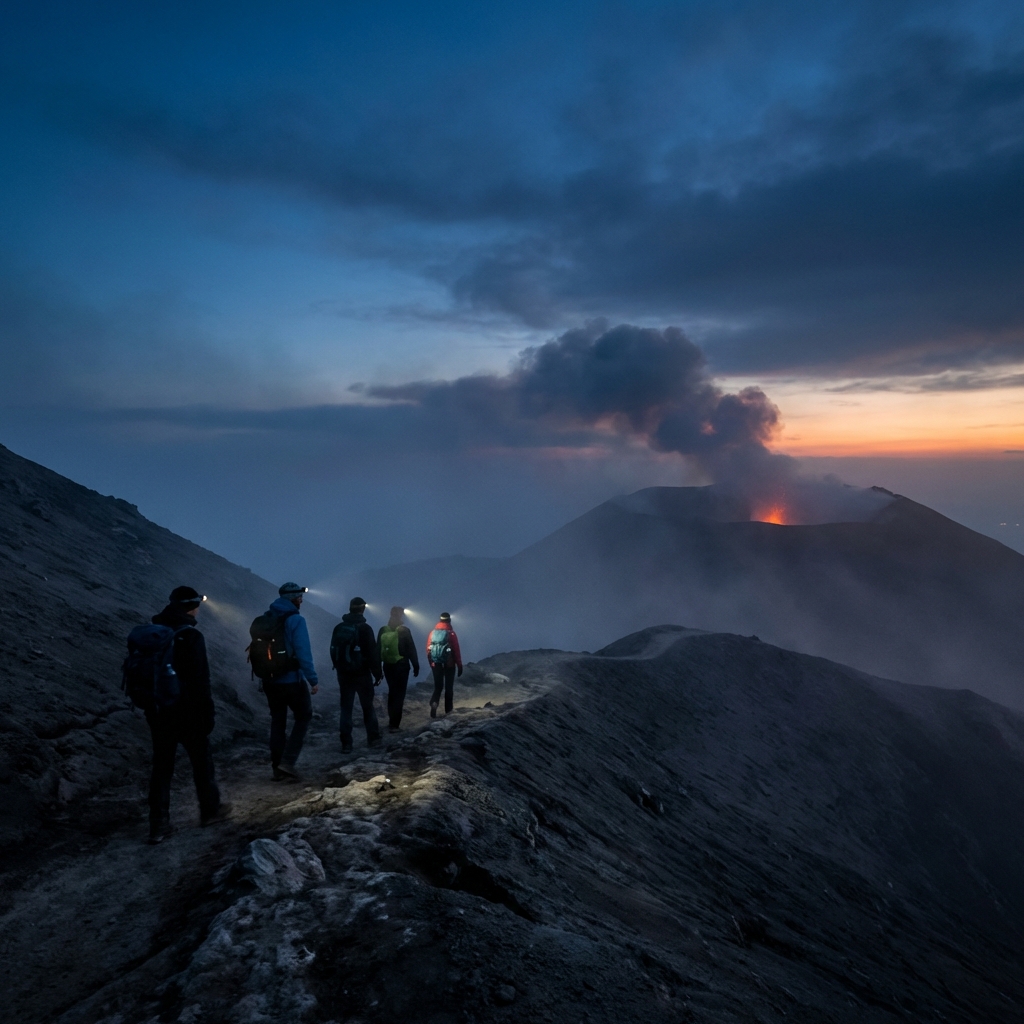
Arrival at the viewing shelters (900m). You put on warm clothes and helmets. Here, you wait. The explosions can be felt in your chest before they are heard. Witnessing the magma bubble and burst against the twilight sky is unforgettable.
Pizza & Beer
The descent takes about 1.5 hours. You arrive back covered in fine black dust, tired but exhilarated. All restaurants are open late specifically for returning hikers.
Frequently Asked Questions
Can children climb Stromboli?
Generally, only children over 7-10 years old who are used to hiking. It is not a place for carrying toddlers. Many guide companies have a strict age minimum (often 7 or 10).
Is it safe for asthmatics?
The summit area can have high concentrations of sulphur dioxide and volcanic particles. It is NOT recommended for anyone with moderate-to-severe asthma or heart conditions.
What if I can't make it to the top?
Guides monitor the group constantly. If you are struggling early on, you may be sent back down (often with a second guide or joined to a descending group). If you struggle near the top, it becomes complicated. Be honest about your fitness before starting.
5. At the Summit
Words can't fully capture the experience of standing at Stromboli's crater rim. As darkness envelops the island, the volcano comes alive with a spectacular display of orange-red explosions, molten rock arcing through the night sky, and the deep rumble of the Earth itself.
You'll typically spend 45-60 minutes at the summit, positioned at a safe distance from the active craters. During this time, you might witness several eruptions—each one unique, some more powerful than others.
6. Pro Tips
- 1Book in advanceDuring July-August, tours fill up days ahead.
- 2Eat a substantial lunchYou won't have a proper meal until 10 PM.
- 3Bring hand warmersThe summit is windy and cold, even in summer.
- 4Camera settingsUse manual focus and high ISO (1600+) for night shots.
- 5Stay the nightDon't rush to the ferry immediately the next morning.
Ready to climb Stromboli?
We can help you choose the right guided excursion based on your fitness and schedule.